

Can Decorative Film Replace Etched Glass?
For most projects, decorative window film gives you the frosted, etched look without replacing a single pane of glass, and from a few feet away almost nobody can tell the difference. Etching is a permanent change to the glass itself, which means ordering a new panel, pulling the old one, and living with the result forever. Film is applied to the glass you already have, in an afternoon, and it comes off cleanly when the office is reconfigured or the tenant changes. That is why conference rooms, entry doors, sidelights, and office partitions across Sarasota and Manatee County are filmed rather than etched. There are still cases where real etching is the right call, and we will be straight about those too. We have been installing 3M decorative products on Gulf Coast glass since 2009.
Table of Contents
- What Etched Glass Actually Involves
- What Decorative Window Film Does Instead
- Where Film Is the Better Answer
- Where Real Etching Still Wins
- What to Check Before You Pick a Pattern
- Frequently Asked Questions
What Etched Glass Actually Involves
Etching removes material from the surface of the glass, either with acid or with abrasive blasting through a mask. It is done at a shop, not on site, because the process is messy and the glass has to be handled flat. For an existing building that means measuring the opening, ordering a replacement panel, waiting for it, and scheduling a swap.
The bigger consideration is permanence. An etched panel is the design, forever. If the tenant rebrands, the department moves, or the pattern stops feeling current, the only way to change it is to buy another panel. In commercial space that turns over on a lease cycle, that is a real constraint, and it is usually the reason the conversation turns to film.
What Decorative Window Film Does Instead
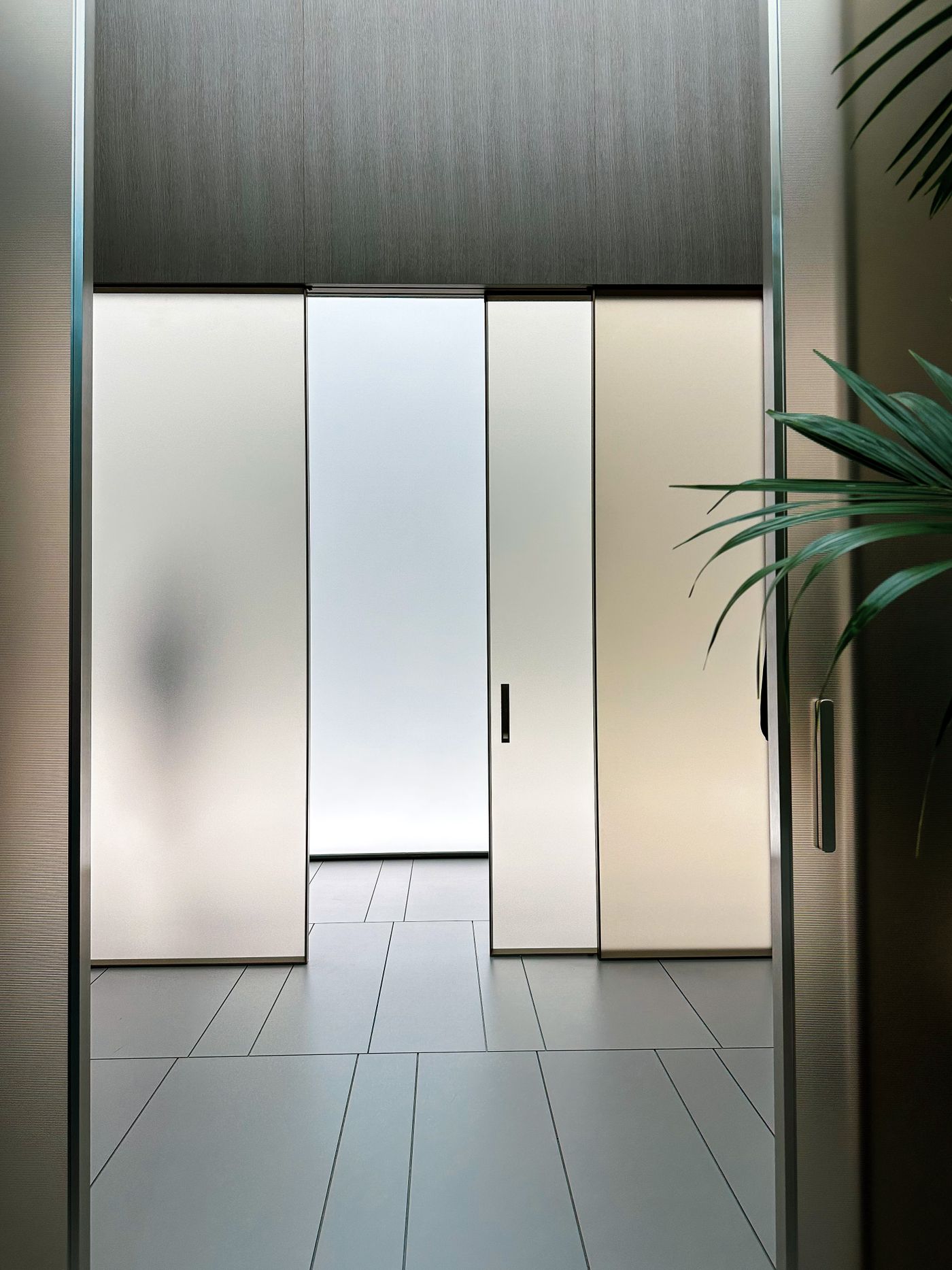
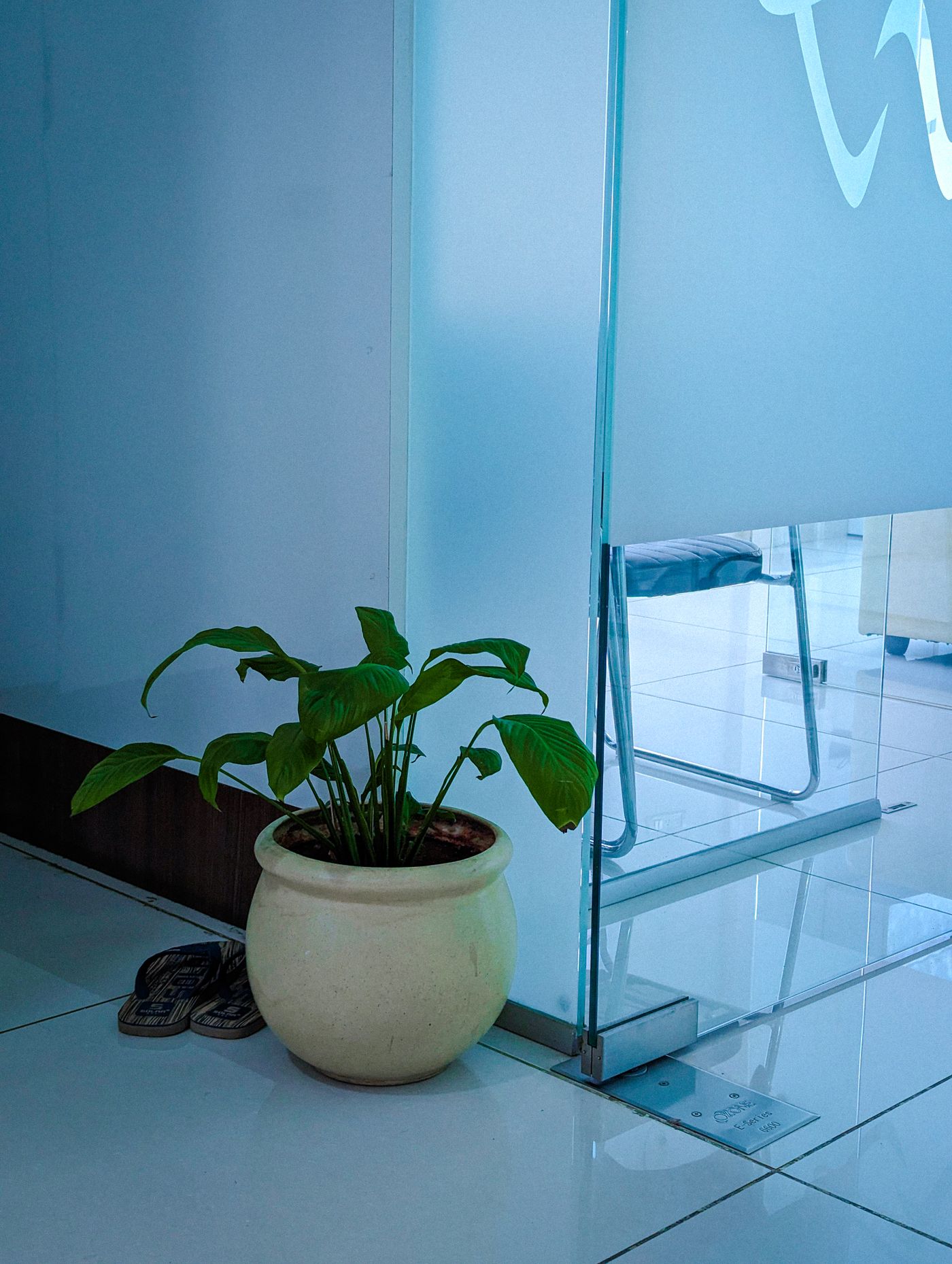
Decorative film is a thin polyester layer applied to the interior surface of the existing glass. Frosted and dusted patterns diffuse light the same way etching does, so the glass glows instead of going opaque and the room keeps its daylight. The visual result is close enough that most people assume the glass is etched unless they run a hand across it.
The selection is wider than most people expect: plain frost, gradients that fade from solid to clear, linen and reeded textures, geometric patterns, bands at sightline height, and full custom artwork. The International Window Film Association is a useful neutral place to read about the category before anyone shows you samples. Our decorative window film page has the pattern options we carry.
Patterns, Gradients, and Custom Artwork
Etching a custom design is expensive in effort and impossible to revise. Printing one on film is routine. A logo across a conference room wall, a repeating pattern in brand colors, a frosted band with your name reversed out of it: all of that is cut or printed and installed the same way a plain frost is. If you want the design to be yours rather than a catalog pattern, custom printed window film is the path, and printed graphics on window film covers what artwork reproduces well.
Where Film Is the Better Answer
Several situations make the decision easy before anyone compares finishes.
- The glass is already installed and you do not want to replace it.
- The space is leased, and a permanent change to the landlord’s glass is either not allowed or not wise.
- The design might change. Branding, departments, and room functions all move.
- The glass is an odd size, tempered, or part of a system where a replacement panel is slow to source.
- You need it done this week rather than this quarter.
- Privacy is the actual goal and the look is secondary.
That last one covers most of the work we do. A glass-walled office needs the lower half obscured so people stop watching each other work. Nobody is commissioning art, they are solving a distraction, and a frosted band handles it in an hour. See privacy without blocking natural light for how that gets specified.
Where Real Etching Still Wins
Film is not always the answer and it would be dishonest to pretend otherwise. Deep carved glass, where the pattern has real depth you can feel, is not something a surface film reproduces. A signature architectural feature meant to last the life of the building is a fair argument for etching. And glass that will be handled hard, scrubbed constantly, or exposed to abuse on both faces may be better as etched glass, since the pattern is in the material rather than on it.
There is also a third option people forget, and it is not glass at all. 3M DI-NOC architectural finishes are self-adhesive films for surfaces rather than windows, available in wood grain, stone, metallic, and matte looks that go over flat and curved metal, wood, and glass. When the frames, doors, or millwork around the glass are what actually look dated, that is the product. Our decorative plex page covers that line.
What to Check Before You Pick a Pattern
Three practical checks save rework. First, decide what the film needs to hide at what height, and mark it on the glass with tape before ordering. A band that looks right in a drawing is often six inches off in the room. Second, if the glass is exterior and gets direct sun, say so, because a decorative product may need to be paired with solar performance or chosen with thermal stress in mind.
Third, if the glass is in a door or along a walking route, confirm any visibility requirements that apply to your building before you obscure it. Accessibility and safety codes have things to say about vision panels and marking large areas of glass, and the ADA Accessibility Standards are the place to start that check with your architect or code official.
Frequently Asked Questions
Can you tell the difference between film and etched glass?
Not from normal viewing distance with a quality product and a clean install. Up close, etching has texture you can feel and film is smooth. Bad installs give themselves away with bubbles or lifted edges, which is an installer problem rather than a product one.
Does decorative film give privacy at night?
Frosted and patterned films diffuse light in both directions, so unlike reflective films they keep working after dark. That is exactly why they get used on bathrooms, sidelights, and interior offices.
Will it block heat or UV?
Decorative products are chosen for appearance, not solar performance. If the glass is also hot, that is a different film or a combination, which is what our residential solar film and commercial solar pages cover.
How long does it last?
Interior decorative film on properly prepared glass is a long-term install backed by a manufacturer warranty, not a seasonal treatment. See how long window film lasts.
Can we take it off later?
Yes, and that is the main reason to choose it. Professionally installed film removes cleanly with the right tools, leaving the original glass. Can window film be removed walks through the process.
Does it work on textured or patterned glass?
Film needs a smooth surface to bond to, so reeded, hammered, and heavily textured glass is usually not a candidate. Smooth tinted or low iron glass is fine. If you are not sure what you have, run a hand across both faces before you start choosing patterns, since the answer changes the options.
How long does the installation take?
A conference room or a set of office partitions is typically a single visit. There is no dust, no glass handling, and no drying time that keeps you out of the space. Large custom printed jobs take longer because the artwork is produced first, but the install itself is still measured in hours rather than days.
See the Patterns on Your Own Glass
Samples held up to the actual window settle this faster than any photo. Browse our decorative film options, then request a quote and we will bring them by.