


Can Window Film Be Removed? 6 Signs It Is Time and How the Pros Do It Without Harming the Glass
Can window film be removed? Yes. Every window film NBI Suncontrol installs is designed to come off cleanly when its service life ends, and film installed by others can be removed too, though old bargain film takes more work. Professional removal uses heat or steam to soften the adhesive, lifts the film in sheets, dissolves the remaining adhesive with a solvent, and scrapes and cleans the glass back to bare. The glass underneath is unharmed when the work is done correctly, and new film can go on the same day. This guide covers when film needs to come off, how we do it on Sarasota, Manatee, and Charlotte County homes and businesses, and the situations, such as double-pane and low-E glass, where the method matters.
Table of Contents
- The Short Answer
- Why Window Film Comes Off at All
- Signs Your Film Is Ready to Be Replaced
- How Professionals Remove Window Film
- Can Window Film Be Removed From Double-Pane and Low-E Glass?
- What Removal Does and Does Not Do to Your Glass
- Removing Film Before Selling or Renovating
- Why We Replace Old Film With 3M
- Removal on Commercial Glass: Storefronts, Offices, and Schools
- What Happens to the Old Film
- Removal Checklist for Homeowners
- Frequently Asked Questions
The Short Answer
Homeowners ask us can window film be removed for three reasons: the film they have is failing, they are replacing windows or selling the house, or they had a bad experience with a cheap film and want to know whether 3M film would trap them the same way. The answer to all three is the same. Window film is a surface-applied product held on by a pressure-sensitive adhesive. It bonds to glass, not into it, and it releases with heat and time. Our crews have removed film from thousands of windows across the Suncoast since 1973, including film we installed decades earlier.
That said, removal is real work, and the older and cheaper the film, the harder it is. The adhesive on a 15-year-old dyed film from a big-box store has often broken down into a gummy layer that fights every inch. The adhesive on a 3M film, even after its full life, releases more predictably. If you want the background on how long that life is, read how long window film lasts.
Why Window Film Comes Off at All
Window film is a laminate of polyester layers, coatings that block heat and UV, a scratch-resistant hard coat on the room side, and an adhesive on the glass side. The adhesive is engineered to hold through years of thermal cycling, which on a west-facing Sarasota window means glass that swings from 70 degrees at dawn to over 140 degrees by mid-afternoon in August. Heat softens it, which is exactly what makes removal possible: warm the film past the temperature it normally sees, and the adhesive lets go.
Film fails from the outside in. UV breaks down the dye in cheaper films, turning them purple. Moisture works into the edge and lifts it. The adhesive itself eventually loses its grip and bubbles. A quality film delays all three for a very long time, which is one reason we install only 3M, but nothing on glass lasts forever, and every film reaches the point where removal and replacement is the answer.
Signs Your Film Is Ready to Be Replaced
Film that needs to come off usually tells you.
- Bubbles or blisters that were not there at install and are growing. The adhesive has failed in that spot.
- A purple or brown tint on film that used to be neutral. The dye has broken down and the film is no longer blocking what it was supposed to.
- Peeling at the edges or corners that you cannot press back down.
- A cloudy or hazy look across the whole pane that does not clean off.
- Scratches through the hard coat from years of cleaning with the wrong tools.
- Heat and glare have come back. If a room that used to be comfortable is hot again, the film’s heat-rejecting layers may have degraded. Our post on whether window film reduces heat explains what a working film should be doing.
A film with none of these signs does not need to come off, even if it is old. Age alone is not a reason.
How Professionals Remove Window Film
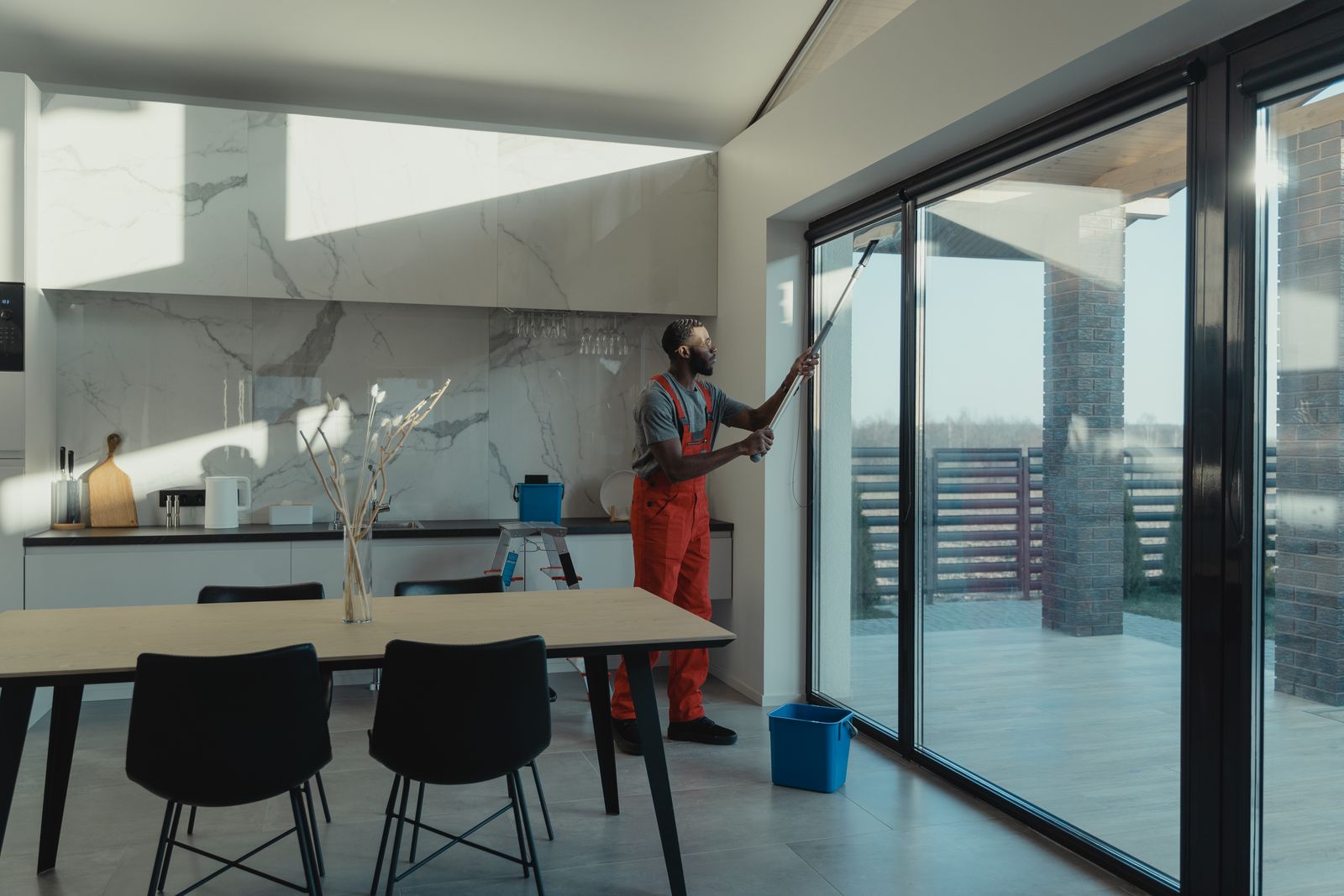
Here is the process our technicians follow. It is the same on a residential slider and a 20-foot storefront, scaled up.
- Protect the room. Sills, floors, and furniture are covered, because removal involves water, solvent, and adhesive residue.
- Heat the film. A heat gun or a steamer warms the film in sections until the adhesive softens. On large commercial glass, a steamer is faster and gentler.
- Lift a corner and peel. With the adhesive soft, the film comes off in sheets. Cheap or very old film may come off in strips, which takes longer but does no harm to the glass.
- Dissolve the residue. An adhesive remover is applied to the glass and allowed to work. The remaining adhesive is scraped with a fresh razor blade held flat, then wiped.
- Clean and inspect. The glass is cleaned to bare, checked for any scratches or damage that predated the film, and photographed.
- Install the new film, usually the same day, once the glass is dry and the room is clean.
Can window film be removed by a homeowner? Small windows, yes, with a heat gun, patience, and fresh blades. Large panes, high windows, and anything on a tempered or double-pane unit should be left to a professional, because a razor at the wrong angle or heat concentrated on one spot is how glass gets scratched or cracked. The International Window Film Association publishes consumer guidance on removal and replacement that matches what our crews do.
Can Window Film Be Removed From Double-Pane and Low-E Glass?
This is where the question can window film be removed gets a more careful answer. Double-pane insulated glass units hold a sealed air or gas space between two panes, and heating one pane far more than the other stresses the seal and can crack the glass. Removal on double-pane windows uses lower, more even heat and more solvent time. It takes longer and it is not a job for a heat gun in untrained hands. Our post on window film on double-pane windows covers the same thermal stress concern for installation.
Low-E glass adds a wrinkle. If the low-E coating is on an exposed surface, which is rare in Florida but happens on some older units, aggressive scraping can damage it. Our technicians identify the glass type before any tool touches it, using the same inspection we do before installing 3M film, so the removal method matches the glass. On the rare occasion film should not be removed from a specific unit, we say so.
What Removal Does and Does Not Do to Your Glass
Removal does not harm glass when it is done right. Adhesive residue comes off completely. Tint, haze, and color go with the film. What removal does not do is fix anything that was wrong with the glass before the film went on. Scratches that were under the film are still there. A failed double-pane seal that was fogging before the film will still fog. Hard-water etching on exterior glass is unrelated to film. Our technicians photograph the bare glass after removal so both of us can see its condition before new film goes on.
One more thing removal does: it resets the glass’s exposure. Bare glass in a Sarasota home lets in the full load of UV and heat again, which is noticeable within a day in summer. That is why we schedule removal and the new install for the same visit whenever possible. If you are weighing whether to replace the film or the windows themselves, our post on window film vs new windows compares the two.
Removing Film Before Selling or Renovating
Sellers ask whether old film hurts a listing. Failing film does; buyers see bubbles and purple and assume the windows are bad. Good film helps, and 3M film with a transferable warranty is a selling point in Florida. Our advice: remove failing film before photos, and leave working film in place with the warranty paperwork. If a buyer wants clear glass, removal after closing is straightforward.
Renovations are the other common trigger. Replacing sliders, adding impact glass, or reframing a window means the film on the old unit leaves with it. New windows can be filmed once installed and cured, which for most manufacturers means waiting about 30 days. If the new units are impact-rated, a security film may be redundant, but a solar control film still cuts heat and glare, as our guide to the best window film for Florida homes explains. For businesses, the commercial window film team handles removal and reinstall after hours so a storefront never sits bare during business hours.
Why We Replace Old Film With 3M
When film comes off and new film goes on, the choice of what goes on decides whether you will be asking can window film be removed again in five years. NBI Suncontrol has been a 3M dealer on the Suncoast since 1973, and the reason is simple: 3M films use dye-free or metal and ceramic technology that does not purple, adhesives that hold through Florida heat and release cleanly at end of life, and a manufacturer warranty that covers bubbling, peeling, and discoloration. The film you are removing, in most cases, is film that did not have those properties.
Every replacement starts with an assessment of what the window needs: heat rejection, glare control, UV protection, privacy, or the storm and break-in resistance of a safety and security film. Then the right 3M product goes on clean glass, and you Get 3M Protected for the long term. Our residential window film services page covers the options, and National Weather Service Tampa Bay is where our crews check the forecast before scheduling exterior work.
Removal on Commercial Glass: Storefronts, Offices, and Schools
Commercial removal is the same process at a larger scale, and it raises a question homeowners do not face: how to keep a business open while it happens. Our commercial crews schedule removal and reinstall after hours or in sections, so a storefront on Main Street in Sarasota or an office in Lakewood Ranch never sits with bare glass during the day. Steam is the tool of choice on large panes, because it softens adhesive evenly across a big surface without the hot spots a heat gun can create.
Schools and government buildings add a paperwork layer. Many have security film with an attachment system bonded to the frame, and that attachment has to be cut and cleaned before the film comes off. It is slower, and it is one more reason can window film be removed is a question best answered by the crew that installed it. NBI Suncontrol keeps records of every commercial install, so when a building manager calls about film we put on in 2009, we know what is on the glass before we arrive. Our commercial window film services page covers the buildings we serve.
What Happens to the Old Film
Removed film is polyester with a thin metal or ceramic coating and adhesive residue. It is not recyclable through curbside programs, and our crews bag and dispose of it with the job’s waste. What is worth keeping is the paperwork: the original install date and product, which tells us whether a 3M warranty claim applies before removal even starts. If a 3M film fails inside its warranty period, replacement is handled under warranty, and the removal is part of that. Ask about it before scheduling; it is one more way that choosing 3M film in the first place changes the answer to can window film be removed from a cost into a service call. For everything else, the window film FAQ answers the questions we hear most, and our Sarasota County team is a call away.
Removal Checklist for Homeowners
If you want to remove a single pane yourself before calling, or want to know what the crew will do, here is the sequence in order.
- Confirm the glass type. A small etched mark in a corner reads tempered or laminated. Unmarked glass is usually annealed and needs more care with heat.
- Warm the film with a hair dryer or steamer, never a heat gun on annealed glass.
- Lift one corner with a plastic razor and pull at a low angle, slowly. Fast pulls tear the film and leave more adhesive.
- Spray the residue with soapy water, let it soak, and scrape with a fresh blade held nearly flat.
- Clean, dry, and inspect in raking light for haze or scratches before any new film goes on.
One pane takes an hour the first time. A whole house takes a crew a day. That is the honest answer to can window film be removed by a homeowner: yes for a window or two, and a job for NBI Suncontrol for anything more.
Two last notes on timing. Film removal in Florida is easiest in the cooler months, because adhesive that has baked through a summer releases more slowly, and a crew working in October or February clears a house faster than one working in August. And if a hurricane is in the forecast, leave existing film on the glass until the storm has passed; even a failing film holds shards better than bare glass. Once the season settles, can window film be removed and replaced before the next one? Easily, and NBI Suncontrol schedules exactly that for customers across Sarasota and Charlotte counties every spring.
Frequently Asked Questions
Can window film be removed without damaging the glass?
Yes, when heat or steam is used to soften the adhesive and the residue is dissolved rather than scraped dry. Our technicians photograph the bare glass afterward. The window film FAQ covers other common concerns.
How long does it take to remove window film?
A typical residential window takes 20 to 45 minutes depending on the film’s age and condition. A whole house or a storefront is usually a one-day job, with new film installed the same visit. Ask for a timeline when you request a quote.
Can window film be removed from a car?
NBI Suncontrol works on flat glass only: homes, businesses, and institutions. For automotive tint removal, contact an automotive tint shop. For your home or office, our residential and commercial teams cover Sarasota, Manatee, and Charlotte counties.
Does old film have to be removed before new film goes on?
Yes. Film is never applied over film. The old layer comes off, the glass is cleaned to bare, and the new 3M film bonds directly to glass. Our post on whether window film reduces glare explains what a fresh film should deliver.
Ready to Replace Film That Has Seen Its Last Summer?
NBI Suncontrol removes failing film and installs 3M window film for homes and businesses across Sarasota, Manatee, and Charlotte County. Request a free quote and Get 3M Protected.