

Sea Turtle Window Film: 5 Proven Wins for Nesting Season
Sea turtle window film solves a problem every beachfront owner on the Gulf Coast faces from May 1 through October 31: your windows glow toward the beach at night, and Florida’s lighting rules say they cannot. We are NBI Suncontrol, a 3M authorized window film dealer on the Suncoast, and film is the simplest way to bring beachfront glass into compliance without replacing a single window.
Nesting season is also the busy season for citations, HOA letters, and confused owners. This guide covers how the rules work, why they exist, and the 5 wins film delivers on turtle-facing glass.
Key Takeaways
- Florida sea turtle nesting season runs May 1 through October 31, and coastal lighting rules apply the entire time.
- Interior light spilling through windows disorients hatchlings, which follow the brightest horizon to find the Gulf.
- The accepted fix for glass is tint achieving 45% or lower visible light transmittance, a standard 3M films meet.
- Sea turtle window film installs on your existing glass in a day. No window replacement, no exterior change.
- The same film cuts solar heat and blocks up to 99% of UV, so compliance comes with comfort built in.
Table of Contents
- Why Beach Lighting Endangers Hatchlings
- What Florida’s Turtle Lighting Rules Require
- 1. Compliance Without Replacing Your Glass
- 2. Real Protection for Hatchlings
- 3. Cooler Rooms All Summer
- 4. 99% UV Blocked, Fading Stopped
- 5. Keep Your Gulf View, Every Night
- Who Needs Sea Turtle Window Film
- Sea Turtle Window Film FAQs
Why Beach Lighting Endangers Hatchlings
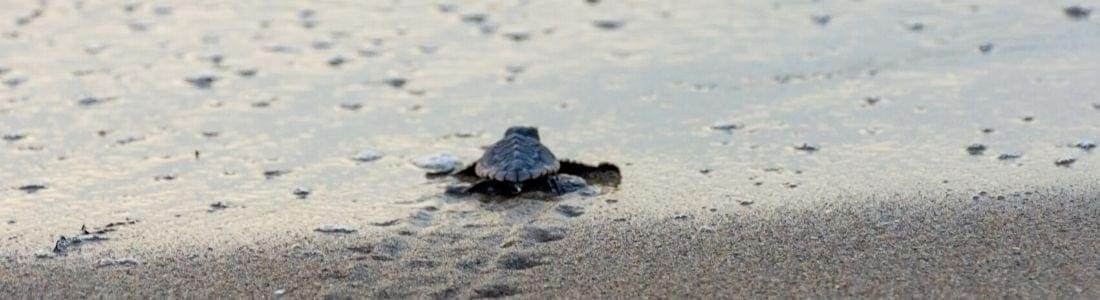
Sea turtle hatchlings emerge from the nest at night and find the water the same way their ancestors did: they crawl toward the brightest, lowest horizon, which for millions of years was moonlight and starlight reflecting off the Gulf.
Artificial light breaks that compass. A lit living room behind a wall of beachfront glass can outshine the ocean, and hatchlings crawl toward the building instead of the water. Disoriented hatchlings die from exhaustion, dehydration, predators, and traffic. Florida beaches host most of the sea turtle nesting in the continental United States, and the Sarasota area beaches, Siesta Key, Lido Key, Longboat Key, Casey Key, and Venice, log thousands of nests every season.
That is why the rules target not just porch fixtures but the light coming through your windows.

What Florida’s Turtle Lighting Rules Require
The Florida Fish and Wildlife Conservation Commission’s wildlife lighting guidance boils down to three words: keep it long, low, and shielded. Long-wavelength amber or red light, mounted low, shielded so it cannot be seen from the beach.
For windows and glass doors visible from the sand, the standard written into coastal lighting ordinances is specific: tinted glass or window film achieving 45% or lower visible light transmittance, so interior light cannot spill onto the beach. Local governments along the Gulf, including Sarasota County, enforce these rules throughout nesting season, and code officers walk the beaches at night looking for glowing glass.
You have three ways to comply: keep every light off in every beach-facing room all season, install and religiously close blackout treatments every night, or treat the glass once with a qualifying film. One of these does not depend on anyone remembering anything.
1. Compliance Without Replacing Your Glass
Sea turtle window film applies directly to your existing windows and sliders. There is no glass replacement, no exterior alteration for a condo board to debate, and no construction. Most beachfront installs finish in a single day.
3M films are available in finishes that meet the 45% transmittance standard while staying architectural, not mirror-dark. Once the film is on, the glass itself is compliant. Nobody has to remember curtains at 9 p.m. in July, and a tenant who leaves the kitchen light on no longer puts you on the wrong side of a county ordinance.
2. Real Protection for Hatchlings
Compliance is the legal reason. This is the real one. Cutting the light your windows throw onto the sand measurably reduces disorientation on your stretch of beach, and disorientation is one of the few hatchling threats a property owner can personally remove.
Sarasota’s conservation groups patrol local beaches every morning in season, marking nests and logging disorientations, and lighting remains the leading cause they record. Filming your glass is a one-time decision that quietly does its job every night for years. It is the rare upgrade that helps your energy bill and an endangered species at the same time.

3. Cooler Rooms All Summer
Here is the part that surprises owners who came for the compliance: the same 3M films reject a large share of the sun’s heat, up to 78% of it at the glass. Beachfront windows take the hardest sun on the coast, with nothing between your sliders and the afternoon except reflection off water and sand.
Owners install sea turtle window film for the ordinance and then notice the west rooms stopped roasting, the AC cycles less, and the electric bill flattens out over the months that follow. We walked through the energy math in our Gulf Coast sun control guide, and beachfront glass is where it pays off fastest.
4. 99% UV Blocked, Fading Stopped
3M window films block up to 99% of ultraviolet light, and UV is the biggest single cause of fading. On the beach, UV exposure is as intense as residential glass gets.
That matters double for rentals and second homes, where nobody rotates the rug or closes the blinds for weeks at a time. Film keeps floors, furniture, art, and window treatments from bleaching out while the unit sits in full sun. If you have compared a five-year-old beachfront sofa to the swatch it shipped with, you already know the problem.
5. Keep Your Gulf View, Every Night
The alternative to filming the glass is covering it: blackout curtains or shutters, closed every single night from May through October. That is the view you bought, gone for half the year, dependent on everyone in the house closing everything correctly at dusk.
Film keeps the glass a window. You see the Gulf at sunset, the room keeps its daylight, and the beach side of the building stays dark to a hatchling. For a look at how films balance light and view on the sun side, read Block the Sun, Not Your View.
Who Needs Sea Turtle Window Film
If your windows or glass doors are visible from the sand anywhere on the Suncoast, the lighting rules apply to you in season. The owners we help most often:
- Beachfront condo owners whose associations send lighting-compliance notices every spring.
- Vacation rental owners who cannot rely on guests to manage curtains and lights night after night.
- Single-family beachfront homeowners on Siesta Key, Lido Key, Longboat Key, Casey Key, and Venice.
- Condo associations looking for one building-wide fix instead of unit-by-unit curtain policies.
Not sure whether your glass counts as visible from the beach? Send us a photo from the sand at night. We will tell you straight.
Sea Turtle Window Film FAQs
When is sea turtle nesting season in Florida?
May 1 through October 31 on Florida’s Gulf Coast, and coastal lighting rules apply for the entire six months. Some Atlantic coast counties start March 1. Your glass needs to be compliant before the first nests appear, which makes spring the busiest install season for Gulf Coast window film.
What is turtle glass?
Turtle glass is shorthand for glass that lets 45% or less visible light pass through, the standard coastal ordinances use for windows visible from the beach. You do not need new windows to meet it: a qualifying window film on your existing glass achieves the same rating. We compare the two paths in window film vs. new windows.
Will sea turtle window film make my condo dark?
No. The 45% standard is about light leaving your windows at night, not about living in a cave. Modern 3M films in compliant ratings keep rooms bright and views clear while cutting glare and heat. See how film manages light without killing the view.
Does the film help with anything besides compliance?
Yes, that is most of its value: up to 78% of solar heat rejected and up to 99% of UV blocked, which means cooler rooms, lower cooling bills, and furniture that stops fading. Owners who also want break-in and storm protection can step up to a safety and security film in a turtle-compliant rating.
Beachfront Glass? Get Compliant Once, Before the Season Sneaks Up
We are NBI Suncontrol, your local 3M authorized dealer. We know the Suncoast ordinances, we carry the compliant films, and most installs take a day. Request a free quote and we will bring samples you can hold up to your own glass.