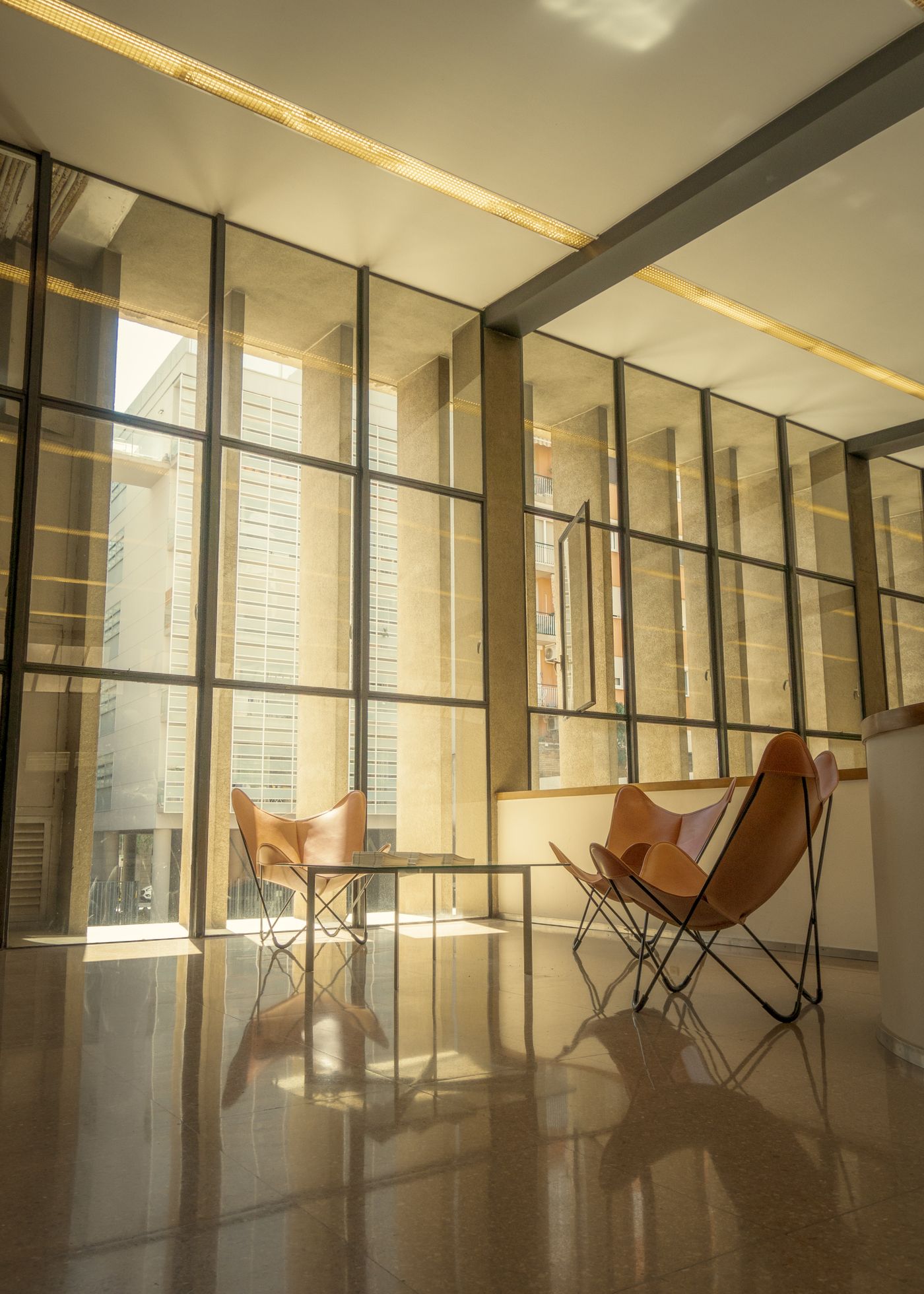


Why Do Hotels Put Film on Their Windows?
Hotel window film shows up on Gulf Coast properties for one blunt reason: the glass creates the guest complaints and the operating costs at the same time. West-facing rooms run hot in the afternoon, the lobby glares by three, the furniture from the last renovation fades on the window side, and the cooling load scales with every pane on the property. Film treats all of it at the glass, on the building you already have, without touching a single window frame or pulling a room out of inventory for more than an hour or two. That combination is why it keeps landing on capital plans instead of full window replacement. We have installed 3M film on Gulf Coast buildings since 2009, and roughly half of our work is commercial.
Table of Contents
- The Two Things a Hotel Sells Are Both Made of Glass
- Hot Rooms and the Complaint That Follows
- Glare in the Lobby, Restaurant, and Meeting Space
- Fading on a Renovation You Just Paid For
- Load That Multiplies by Room Count
- Frequently Asked Questions
The Two Things a Hotel Sells Are Both Made of Glass
A Gulf Coast property sells light and a view. Both of those arrive through windows, and so does everything you do not want: afternoon heat, direct glare, and ultraviolet light. You cannot solve the problem by covering the glass, because the glass is the product. Blackout curtains in a room with a water view are an admission that the building lost an argument with the sun.
Film is attractive to operators because it separates the parts of sunlight that guests are paying for from the parts that generate work orders. Visible light comes through. Most of the heat and nearly all of the ultraviolet do not.
Hot Rooms and the Complaint That Follows
Every property has a set of rooms the front desk quietly avoids assigning in summer. They are almost always on the same exposure, and the pattern is consistent enough that staff know the room numbers by heart. The in-room unit is not undersized. It is fighting a wall of glass that has been absorbing sun since noon, and it cannot win until the sun moves.
Those rooms create a chain of costs that never appear on a single line item. A guest calls. Engineering goes up. The room gets comped or moved. The review mentions it. None of that is a mechanical problem, so no mechanical fix touches it. Cutting solar gain at the window is the change that actually moves the room back into normal rotation.
Why the West Side Is Always the Problem
Afternoon sun comes in low and direct, so it hits the glass at an angle where far more energy passes through than at noon. It also arrives at the end of the day, after the building has already absorbed hours of heat. That is why a west room at five feels worse than a south room at one, even though the south wall took more total sun. The guest checking in at four walks into the worst version of that room.
Glare in the Lobby, Restaurant, and Meeting Space
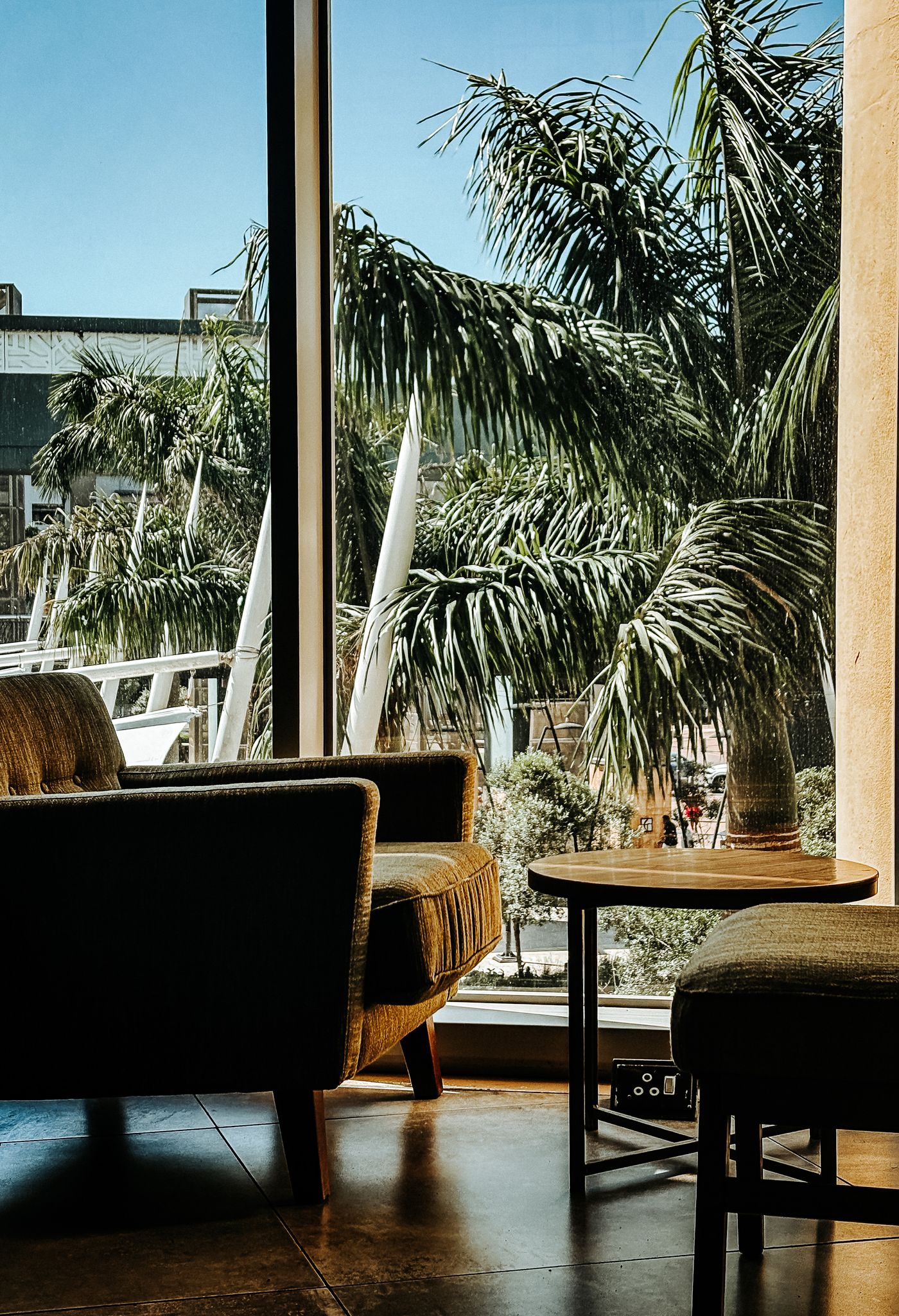
Public space has a different version of the same problem. Front desk agents work facing a glass wall. Restaurant tables on the window side stop getting requested at certain hours. Meeting rooms with exterior glass cannot run a screen in the afternoon without shades, and pulling the shades sells the client a windowless room they did not book.
Solar control film reduces the intensity at the source, which brings the contrast back into a range people can work in. Understanding the ratings helps here, because visible light transmission and heat rejection are separate numbers that get talked about as if they were one. The NFRC consumer guide to window film is a good primer before you compare proposals. If your property has flexible meeting rooms with interior glass, smart film for conference rooms solves the privacy half of that problem on a switch.
Fading on a Renovation You Just Paid For
Nothing ages a refresh faster than sun damage that shows up on one side of the room. Headboards, drapery, carpet near the slider, and wood finishes all fade unevenly, and unevenly is what guests notice. The room does not look worn. It looks mismatched.
Ultraviolet light drives most of that, and quality film blocks up to 99 percent of it. Heat and visible light still contribute, so nothing is fade-proof, but removing the largest factor meaningfully stretches the life of the furniture package. On a property with hundreds of identical rooms, that is a replacement cycle question, not a decor question.
Load That Multiplies by Room Count
A single hot room is a guest issue. Two hundred of them is an energy strategy. Because hotel rooms are close to identical, anything you fix at one window repeats across the whole stack, which is why film gets evaluated the way a building system is evaluated rather than as a cosmetic upgrade.
Properties chasing a certification look at it for the same reason. Glazing performance is one of the levers in building rating systems like LEED, and film is one of the few ways to improve it on an existing envelope without replacing windows. We will not put a savings percentage on your building without seeing it, because that number depends on your glass, your exposure, your hours, and your equipment.
Why Hotel Window Film Wins on Retrofits
Window replacement on an occupied hotel means scaffolding, permits, sealed-up rooms, and a schedule measured in months. Film means a crew working room by room, mostly during the day, with each room back in service the same day. For an operator whose inventory is the entire business, that difference usually decides it. Our commercial window film services page lays out how we sequence that kind of work, and window film versus new windows compares the two directly.
Frequently Asked Questions
Will film block the view guests are paying for?
No. The films specified for hospitality are chosen to stay visually light. Heat rejection and darkness are not the same thing, and modern spectrally selective products deliver one without much of the other.
Can film be installed without taking rooms out of service?
Rooms are typically available again the same day. We work with your housekeeping and engineering schedule and move through the property in blocks so occupancy stays manageable.
Is film safe on insulated or low-E glass?
Often yes, but it depends on the specific glass, and this is where an unqualified installer causes damage. Thermal stress has to be evaluated before a product is selected. We cover the details in window film on double pane windows.
Does film help with storm season?
Safety film changes how glass behaves when it breaks and reduces flying shards, which matters in a building full of guests. It is not a replacement for rated protection, and we say so plainly in does window film protect against hurricanes.
What about balcony doors and sliders?
Sliders are usually the largest single piece of glass in the room and often the biggest source of heat. They are almost always included. See window film for sliding glass doors.
Walk Your Property With Us
Give us the room numbers the front desk avoids and we will tell you what is happening at that glass. See our hotel window film page, then request a quote.