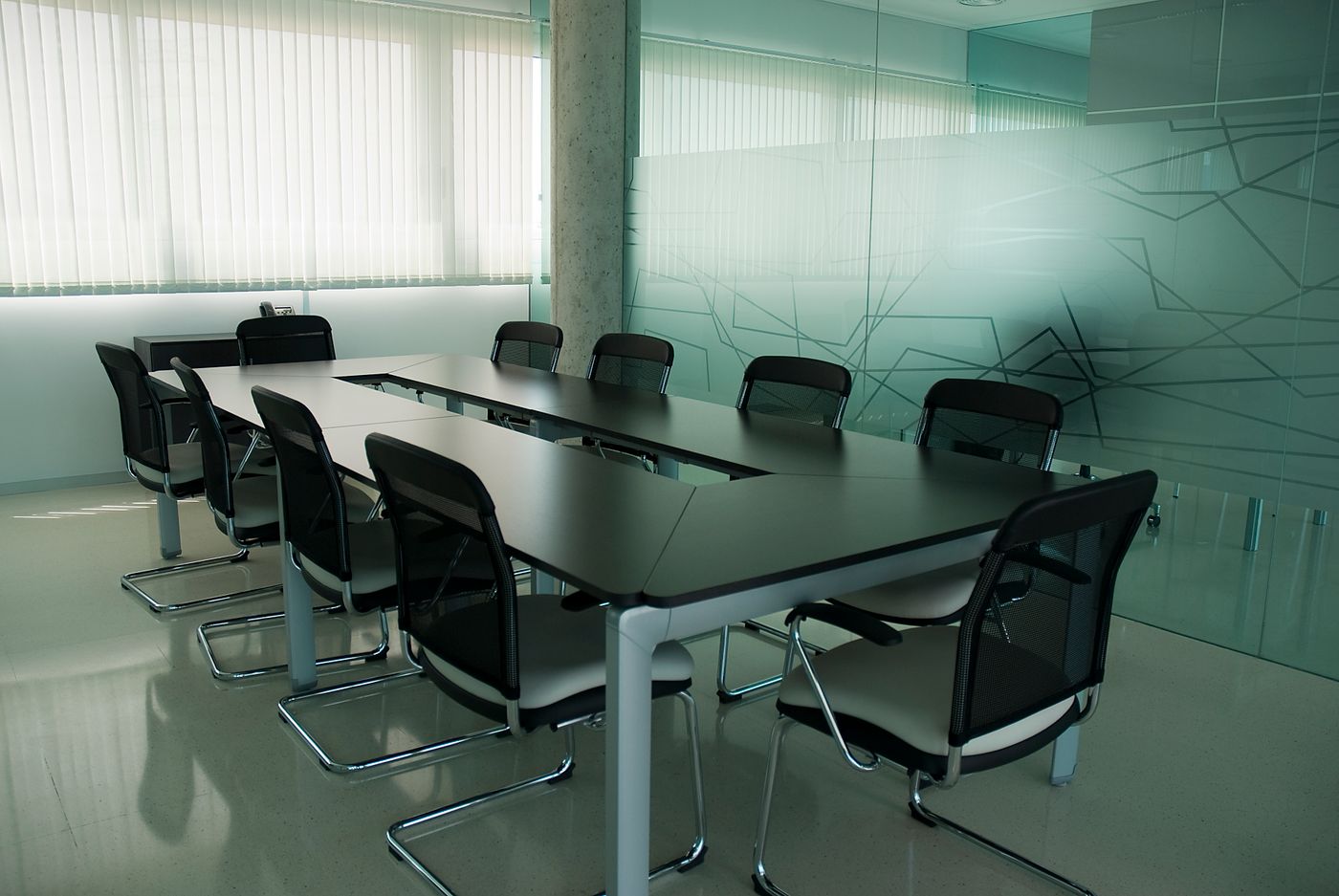


What Is Smart Glass Film and How Does It Work?
Smart glass film is a switchable film applied to existing glass that turns from clear to opaque when power is applied or removed. Inside the film is a layer of liquid crystals suspended in a polymer. With no power, those crystals sit in random orientation and scatter light, so the glass reads as frosted white. Apply low voltage current and the crystals align, light passes straight through, and the glass becomes clear. The switch happens in a fraction of a second. Because it is a film rather than a glass unit, it can be applied to glass already installed, which is what makes it practical for an existing conference room, medical suite, or home. It is not a solar control product and it does not reject meaningful heat on its own. This guide covers how it works, where it fits, and what to check before committing.
Table of Contents
- How Smart Glass Film Works
- Film or Laminated Glass?
- Where It Makes Sense
- What It Does Not Do
- What to Check Before Installing
- Living With It
- Frequently Asked Questions
How Smart Glass Film Works
The technology is usually described as polymer dispersed liquid crystal, and the mechanism is simpler than the name suggests.
Microscopic liquid crystal droplets are dispersed through a polymer layer, sandwiched between two transparent conductive films. In the unpowered state the droplets point in every direction. Light entering the film hits thousands of differently oriented crystals, scatters, and exits diffused. The eye reads that as a translucent white panel. You still get light through it, which is the important part, but you cannot see a defined image through it.
Applying low voltage alternating current across the conductive layers pulls the crystals into alignment. Light then passes through without scattering, and the glass looks clear. Cut the power and the crystals relax back to random within about a tenth of a second.
Two consequences follow from that design. The film draws power only in the clear state, so a room left private overnight uses nothing. And the power draw in the clear state is low, comparable to modest lighting rather than to a mechanical system.
Film or Laminated Glass?
Switchable privacy comes in two forms and the distinction matters for what you can actually do.
Laminated switchable glass has the liquid crystal layer built into the glass unit at the factory. It is the most durable version and the cleanest looking, and it requires replacing the glass, which means new glazing, new framing considerations, and a construction project.
Switchable film is applied to the interior face of glass that is already in place. That is the whole advantage. An existing conference room becomes a private room over a weekend rather than through a renovation. The tradeoffs are that the film is on the room side and therefore reachable, so it is more exposed to damage than a laminated unit, and the edges where the electrical connection is made need to be detailed properly.
For most retrofit situations in Sarasota and Manatee County, film is the practical answer. Our smart film page covers the products we install.

Where It Makes Sense
- Conference rooms. The classic application. Glass walls keep the office open and bright, and the room goes private the moment a confidential conversation starts. Our conference room smart film page covers this setup.
- Medical and dental offices. Treatment rooms and consultation spaces need privacy on demand without permanently closing off daylight or making a space feel like a closet.
- Executive offices. Same logic as a conference room, with the added benefit that the default state can be clear so the office does not read as closed off.
- Residential bathrooms and bedrooms. Particularly on upper floors with a view worth keeping. Clear during the day, private when needed, with no blinds to clean.
- Retail and hospitality. Dividing a space temporarily, or creating a projection surface, since the frosted state works as a rear projection screen.
- Interior partitions generally. Anywhere a wall would solve a privacy problem and create a daylight problem.
That last point is the real argument. Daylight in an interior space is valuable, and the conventional way to get privacy is to give it up. This does not require that trade.
What It Does Not Do
Being clear about the limits prevents disappointment.
It is not a solar control film. Rejecting heat and blocking ultraviolet radiation on exterior glass is a different product category, and if the goal is a cooler room and lower cooling load, that is solar control window film rather than this. ENERGY STAR covers the efficiency side of windows and glazing, and our post on whether window film reduces heat explains how that works.
It is not a security product. The film does not meaningfully hold glass together under impact. That is safety and security film, which is engineered specifically for it.
And the opaque state is translucent, not blackout. It blocks the view and passes light. A room that needs to be dark still needs a shade.
What to Check Before Installing
- Is there power nearby? The film needs a low voltage supply and a controller. Getting power to the glass is often the largest part of the project, and it is easier during a fit out than afterward.
- How will it be switched? Wall switch, remote, app, or integration with a building control system. Decide before the wiring is run.
- What is the glass? Flat glass is straightforward. Curved glass, heavily textured glass, and some coated units complicate the installation.
- Interior or exterior glass? This is designed for interior partitions. On exterior glass in Florida sun, heat and ultraviolet exposure are a real consideration, and the assembly has to be specified for it.
- How big are the panels? Switchable film comes in finite widths, so large walls have seams. Where those seams fall should be planned against the mullion layout rather than discovered on installation day.
- Does it affect any code requirement? Glass used in certain locations has safety glazing requirements under the Florida Building Code, and applying film does not change those obligations.
Living With It
Day to day it is undemanding. Clean it the way you would clean any window film: a soft cloth, a mild non ammonia cleaner, and no abrasive pads or scrapers. Ammonia based glass cleaners degrade film over time and should be kept away from it.
Expect the frosted state to have a slight haze when viewed at a sharp angle, and expect a visible busbar along one edge where the electrical connection is made. Both are normal and neither is a defect.
The controller and power supply are the components most likely to need attention over the life of the installation, and they are accessible, which is a point in favor of film over laminated glass. Our post on how long window film lasts covers service life across product types.
Frequently Asked Questions
Does smart glass film work without power?
It defaults to the frosted, private state with no power applied. Power makes it clear, so a power failure leaves the glass private rather than exposed.
Can smart film be applied to existing glass?
Yes, that is its main advantage over laminated switchable glass. It is applied to the interior face of glass already installed, so no glazing has to be replaced.
Does smart glass film block heat?
Not meaningfully. It is a privacy product. Heat rejection and ultraviolet blocking come from solar control film, which is a separate product for exterior facing glass.
Is the frosted state completely opaque?
It blocks the view but still transmits light, so it reads as translucent white rather than blackout. Silhouettes may be faintly visible directly against the glass.
Ready to Make Your Glass Switchable?
NBI SunControl installs smart film and commercial glass solutions across Sarasota, Manatee, and Charlotte County. Request a quick quote and we will look at the glass and the power routing together.